Практический гид по ИИ-моде
How AI Virtual Try-On Works
AI clothes try-on combines visual information from a person photo and a garment reference. It is useful for exploring a direction, but it does not measure the body or simulate a manufacturer’s exact pattern. Knowing that boundary makes the result more useful.
Two images, two different jobs
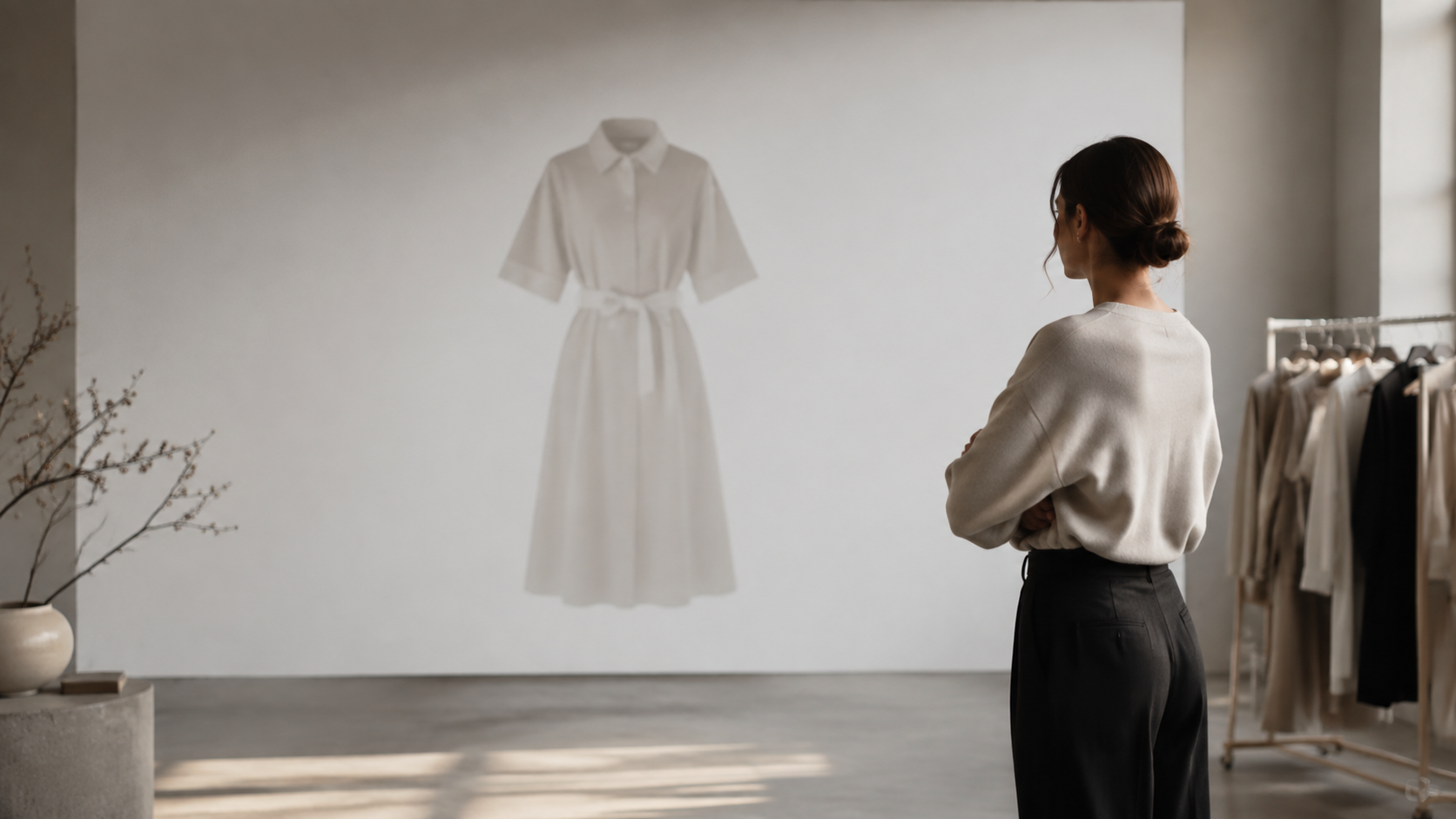
The person photo supplies identity, pose, lighting and the visible body outline. The clothing image supplies visual cues such as silhouette, color, neckline, sleeve length and surface details. The model tries to reconcile both sources into one coherent image.
This is not the same as copying pixels from one image to another. The system generates a new interpretation, which is why small prints, logos, fasteners and exact seams may change.
The model estimates hidden areas
A flat product photo does not show how a garment looks from every angle. Likewise, crossed arms or long hair hide parts of the person. The system must estimate those missing areas based on patterns learned during training, and the estimate can be visually plausible without being accurate to the real product.
References photographed on a mannequin or model may also carry pose and lighting cues that conflict with the destination photo. Clean front-facing references reduce that conflict.
Identity preservation is an objective, not a guarantee
The workflow focuses on changing clothing while keeping the face, hairstyle, pose and general proportions recognizable. Nevertheless, every generated pixel can potentially change. Users should compare the result with the source and avoid presenting it as an untouched photograph.
A result that changes facial features or body shape too strongly should be discarded and regenerated with a clearer input.
Why it cannot predict fit
A photo does not provide reliable body measurements, garment measurements, fabric stretch, lining, support, weight or construction. Even a realistic-looking preview cannot tell whether a real garment will zip, feel comfortable or move correctly.
Use retailer size charts, product measurements, customer reviews and return policies for purchase decisions. AI preview answers “does this visual direction interest me?”, not “will this exact size fit?”.
A responsible review step
Before downloading or sharing, check anatomy, garment boundaries, brands and text. Confirm that everyone pictured consented and that the reference image can legally be used. Disclose the AI alteration when a viewer could otherwise reasonably interpret the image as documentary or unedited.
The safest workflow treats generation as a draft: create, inspect, compare and decide whether the image is clear enough for its intended context.
Frequently asked questions
Does virtual try-on copy a garment exactly?+
No. It generates a new visual interpretation from the reference. Logos, text, seams, prints and small hardware may change.
Does it keep my face unchanged?+
Keeping identity recognizable is an aim, not a guarantee. Review every output and discard results that alter a person too strongly.
What photo works best?+
Use one clear, well-lit photo of a consenting adult. Keep the relevant clothing area visible and avoid crossed arms, heavy filters and large obstructions.
Can a generated image confirm size or fit?+
No. A virtual preview can help compare visual direction, but it cannot measure size, support, comfort, fabric behavior or product quality.
Related guides
AI Virtual Try-On
How to Try On Clothes Online With AI
A practical workflow for using an AI outfit preview online: choose a clear photo, add a clothing reference, compare the result and verify the real product.
Photo Tips
Best Photos for AI Outfit Try-On
Use these practical photo guidelines to give an AI outfit try-on a clearer person image, fewer occlusions and a more useful fashion preview.